FOR MID-SIZE COMPANIES
A small data team that supports the whole company
Past spreadsheets, not drowning in dashboards. Replace the BI seat you’ve outgrown. Defer the next analytics hire.
No credit card required
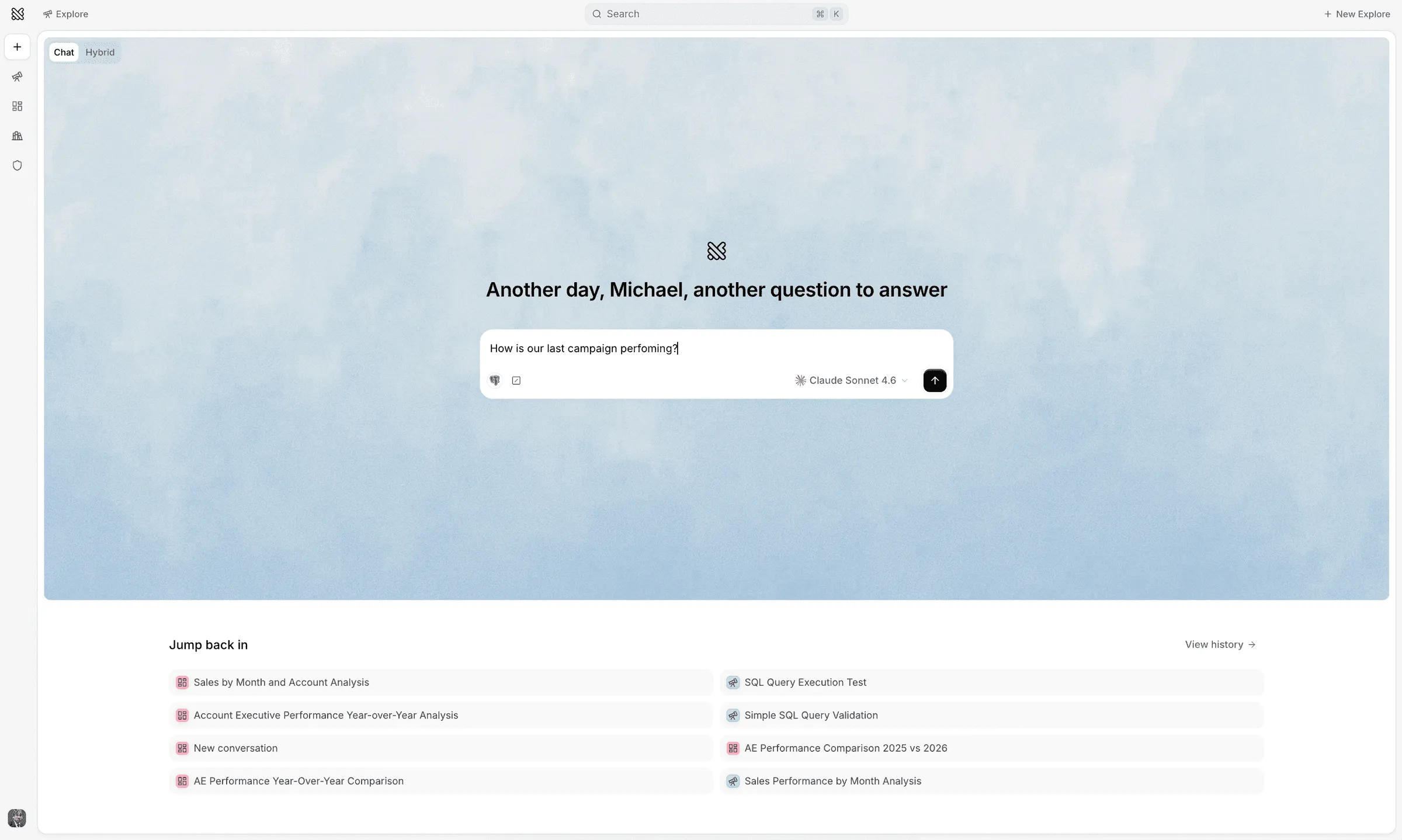
Mid-size companies like yours already benefit from Querio
The small team supports the whole company. Without burning out.
10h
saved per business employee per week

20x
faster reporting cycles

2 w → 30 m
to produce the insights customers rely on







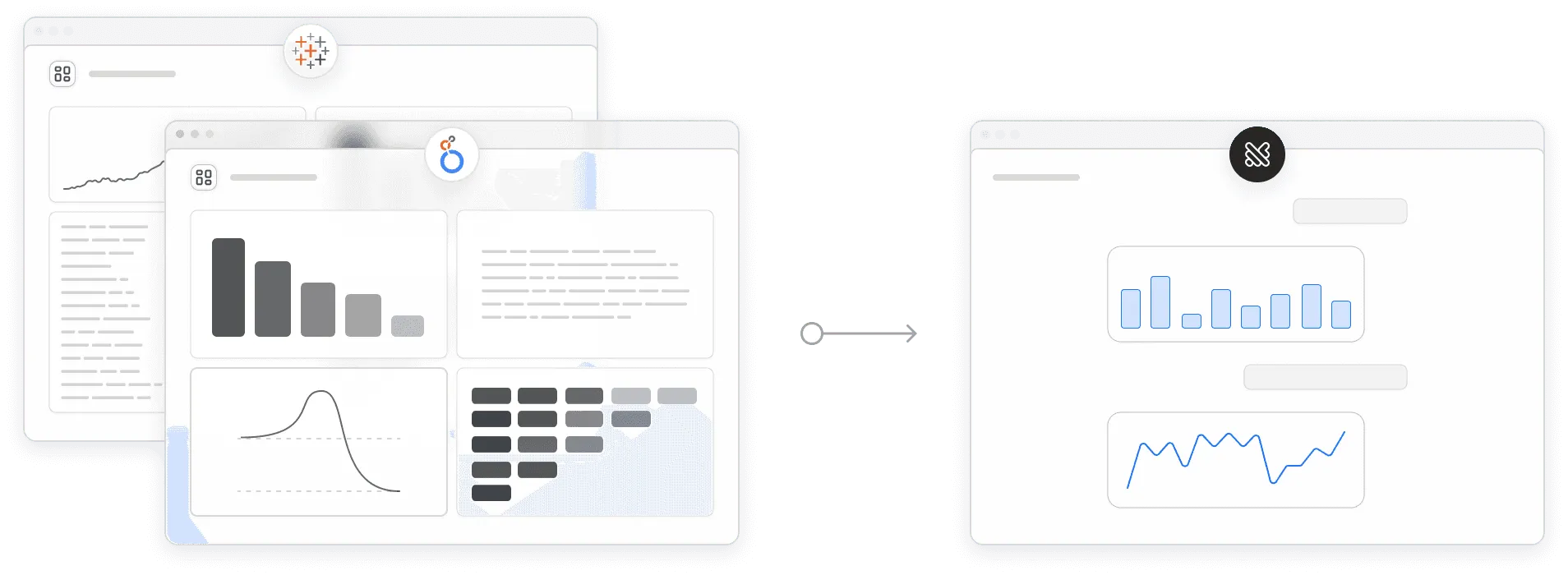
Replace Looker / Tableau and the BI seat
Your BI tool was designed before AI, before MCP, before reactive notebooks. Querio is one workspace for deep analysis in Notebook, plain-language self-serve in Explore, and refreshable Boards — all on one versioned Context layer. Most teams that switch retire the BI seat and at least one ad-hoc AI experiment. Less context-switching for your team, fewer logins for your stakeholders, one place where each metric is defined.
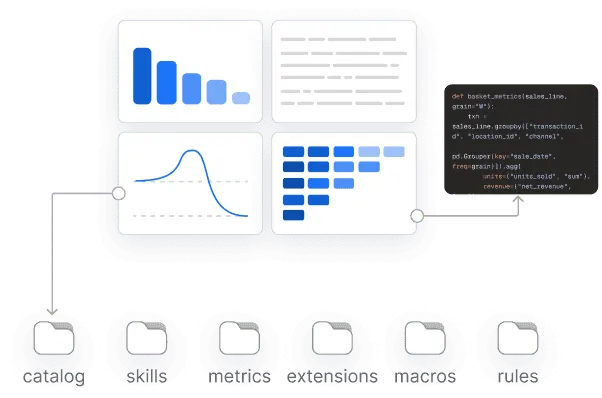
Defer the next analytics hire
The Context layer codifies what your team knows — your metrics, your joins, your business rules — versioned and shared. Explore handles the routine questions; Notebook handles the deep ones; Boards refresh on a schedule from the same Notebook that produced them. The “we need another analyst” conversation slides by a quarter or two. Your team builds context once and the agent inherits it.
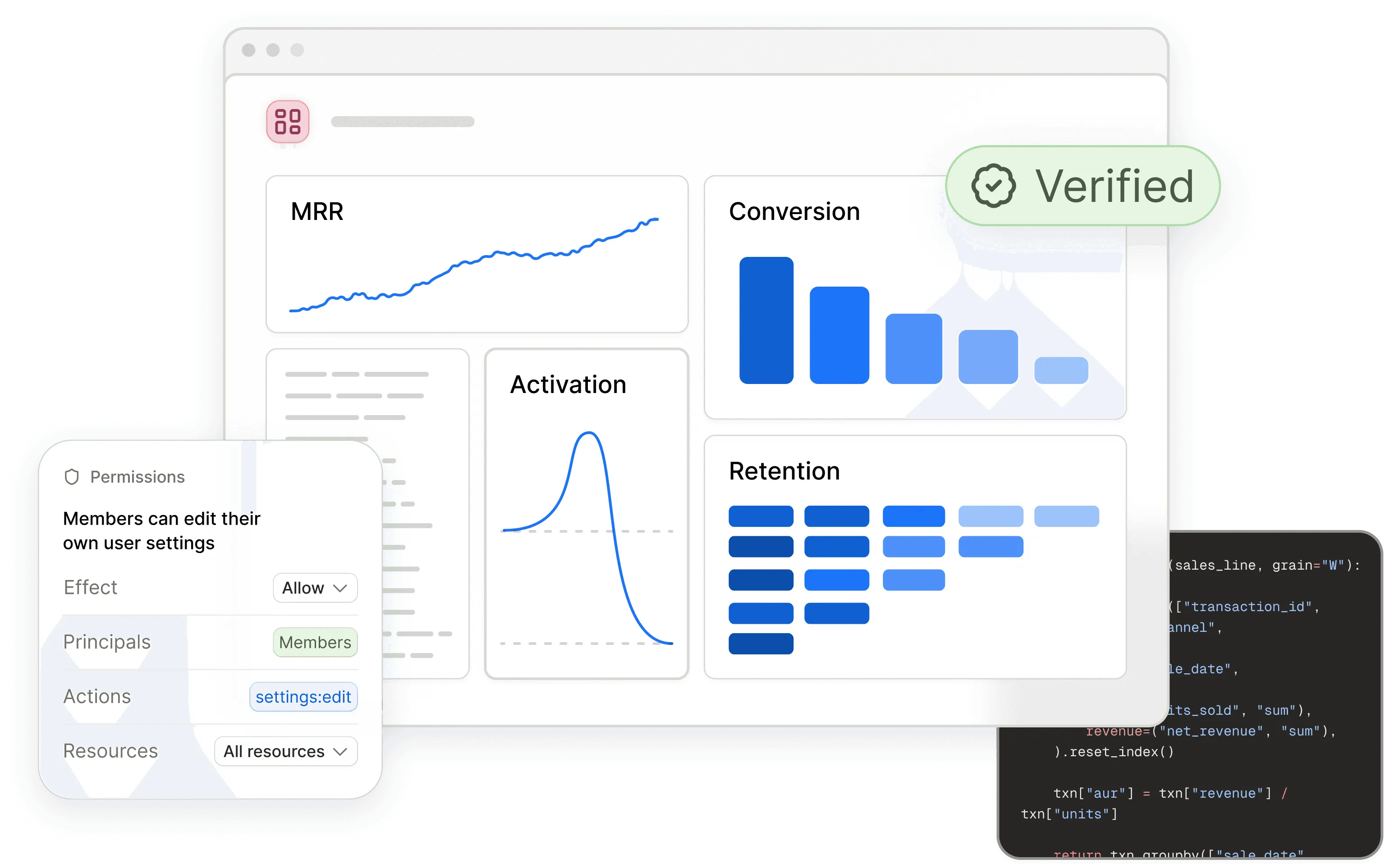
Self-serve without giving up control
Business users ask Querio in plain language. Every answer is real SQL or Python the data team can read, edit, and re-run — so the team stays in control of the metric. As your team accepts answers, those decisions feed back into Context, and accuracy compounds instead of starting over every quarter. Mark a Board “verified” to show stakeholders what’s data-team-reviewed.
The leverage upgrade

Sync your dbt models
Context is dbt-compatible. Sync existing models or layer additional rules on top.
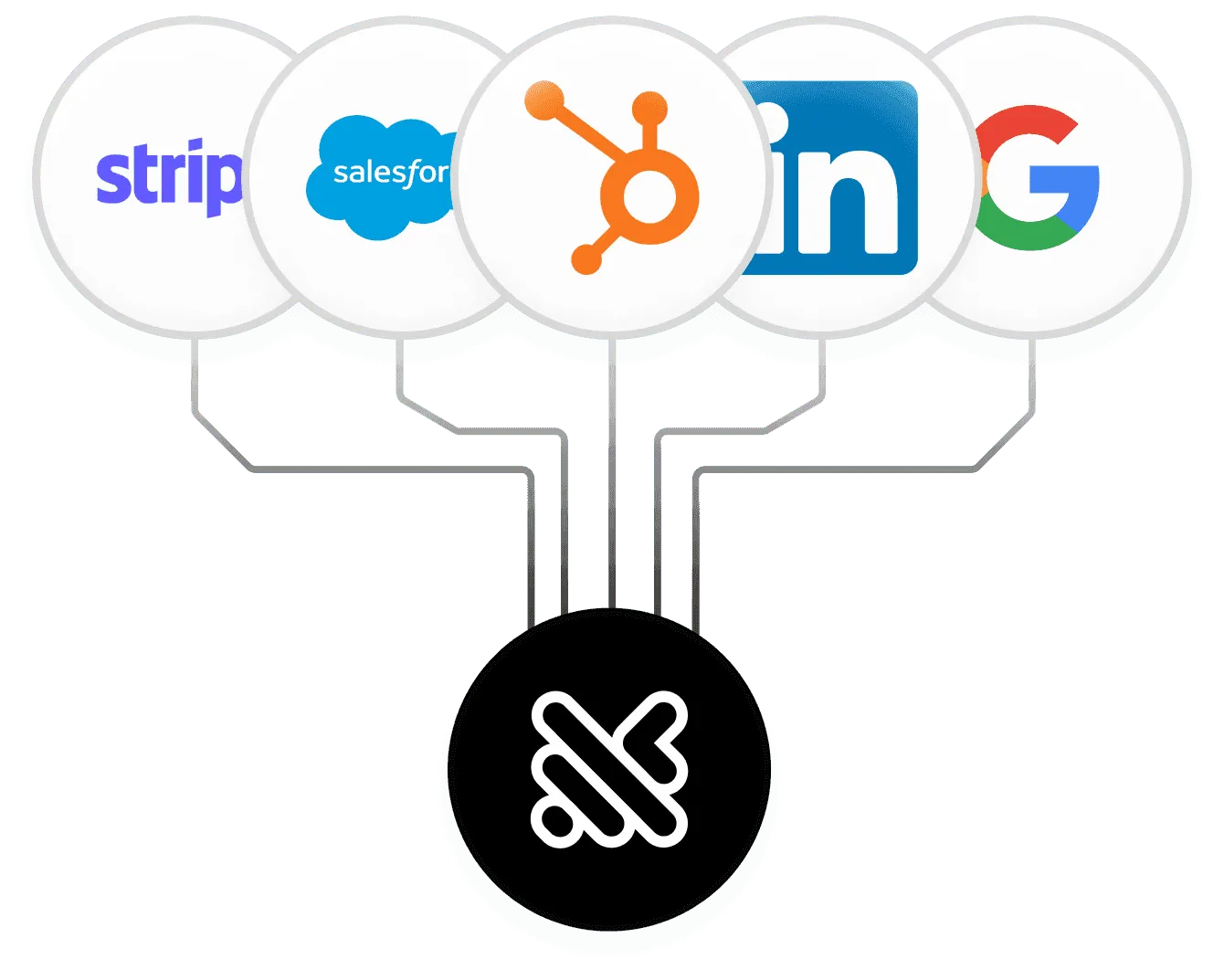
One team supports the whole company
Internal analytics, exec reporting, and customer-facing embedded analytics all run on the same Context.
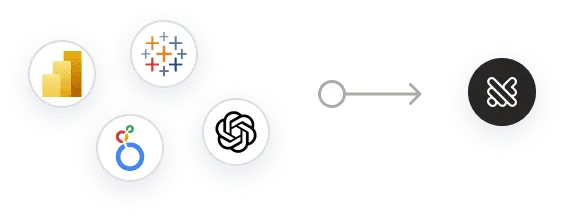
Retire seats and experiments
Most teams retire a BI seat and at least one ad-hoc AI experiment when they switch.
“Querio’s impact on our operational efficiency has been profound. We saved over $200K annually and drastically reduced our reliance on data analysts.”

Built for teams that can't compromise on security.
SOC 2 Type II. Querio runs against your warehouse using your existing credentials. Customer data is never used to train models. RBAC and SSO.
Read our security review ›Your data is never used for training
Querio has read-only access to your data. We cache conversation previews so your past chats load fast — nothing else is stored, and nothing is ever used for training, on our side or our model providers'.
Your queries run inside your infrastructure
Querio's code execution environment — where credentials live and queries hit your database — can run on your own infrastructure. Your data never leaves your perimeter to be queried.
SOC 2, GDPR, and HIPAA ready
Compliance documentation ready for procurement. BAAs available for healthcare, full GDPR alignment for EU data.
Built for security reviews
Documentation, architecture diagrams, and security questionnaires ready to go. We've been through the review process — we know what your team needs.
Frequently Asked Questions
We already have a BI tool. Why switch?
Most mid-size teams that move to Querio retire the BI seat. Your BI tool was designed before AI; Querio is one place where deep analysis, plain-language self-serve, and embedded analytics share the same Context layer.
Does Querio work with our existing dbt models?
Yes. Sync them and Querio uses them as starting Context. Layer additional rules and metrics on top.
Will my analysts still write SQL?
Often, yes. Querio removes the repetitive work so analysts focus on what needs a human in the loop.
How much does it cost?
See Pricing. Most mid-size teams pay less in total than they were paying for legacy BI plus the analyst time they were burning on ad-hocs.
How long to roll out?
A guided pilot is two to three weeks. Most teams have one core use case in production within a month.