HEALTHCARE
Run the business behind the practice
Patient retention, revenue by location, payer mix, no-show rates, CAC by channel. Ask in plain English. Patient data stays in your warehouse.
No credit card required
Trusted by healthcare companies
Querio understands a healthcare business, not just clinical data. Patient data stays in their warehouse.

One source of truth
Made clinical and operations data mutually queryable in one place





Definitions your whole company agrees on
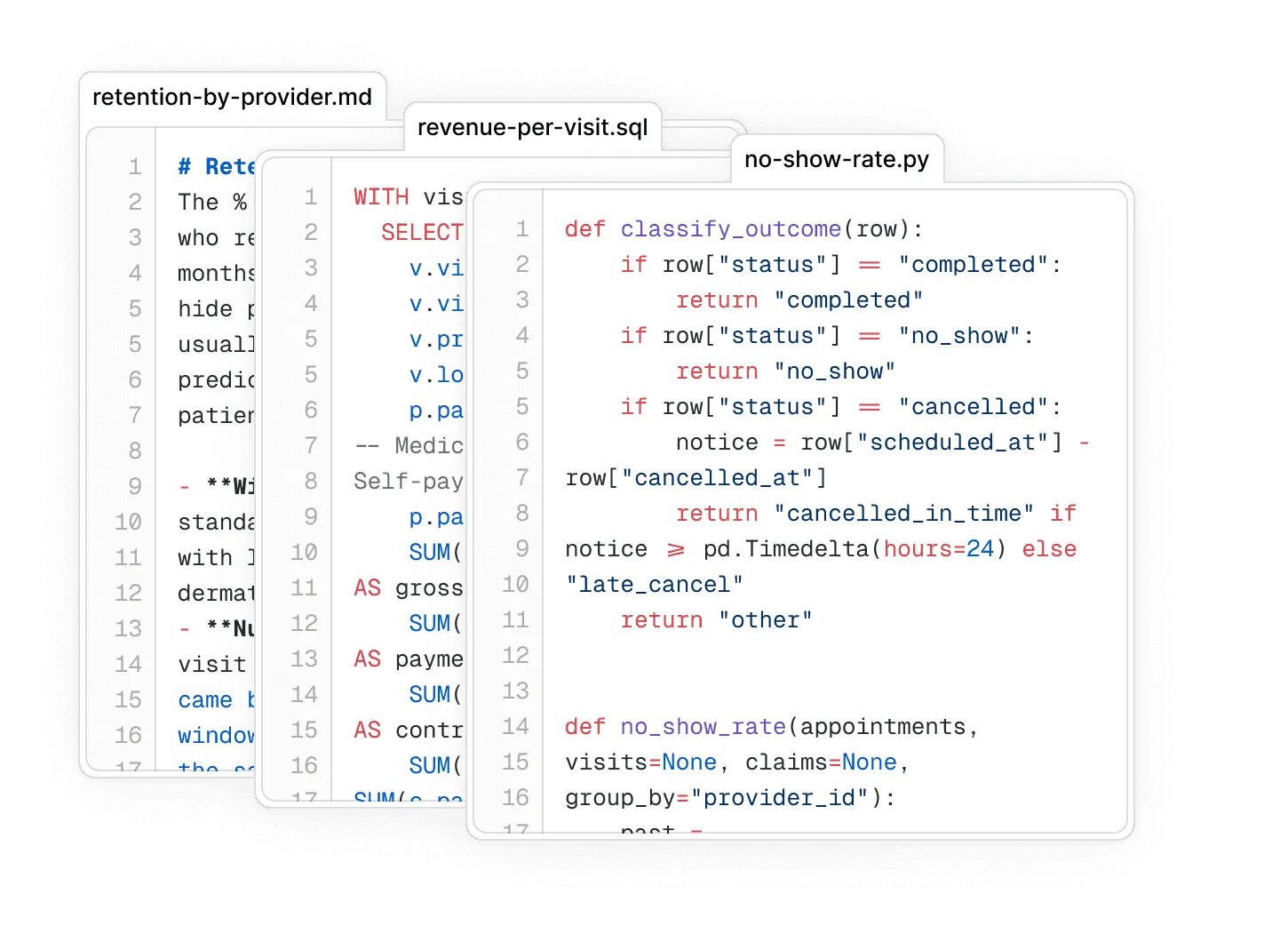
The metrics that drive a healthcare business — retention by provider, revenue per visit, no-show rate, payer mix, CAC — live inside Querio’s Context layer. Versioned and shared, so the location dashboard, the finance review, and the agent’s answer all use the same definition. Change the rule once and every place that uses it updates. The team agrees on the metric once, and the agent inherits it.
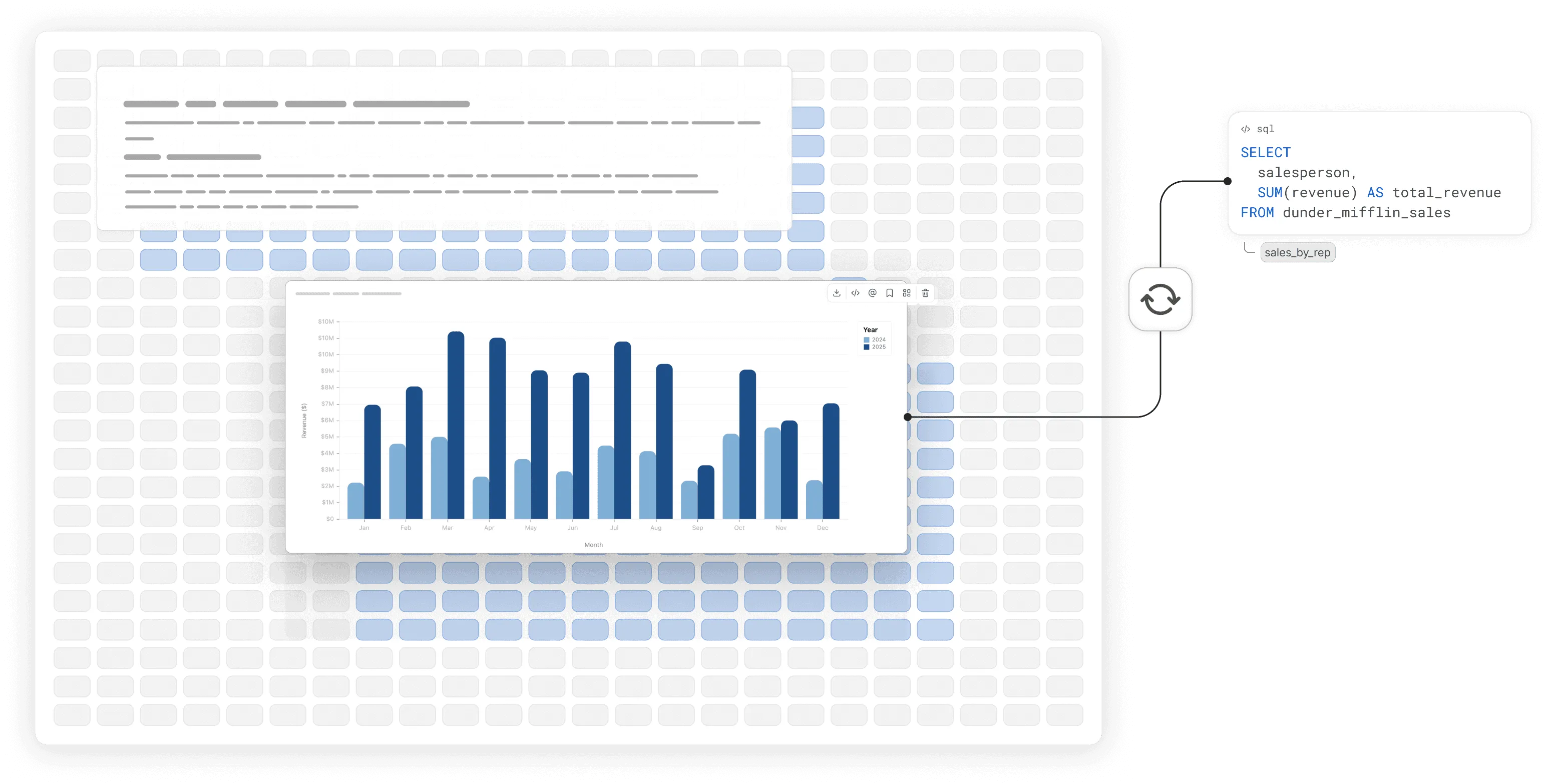
Reports that don’t go stale between board meetings
Build the ops Board once. Patient volume, revenue by location, payer mix, denial rates, marketing CAC. It pulls from a reactive Notebook and refreshes on a schedule, so the board meeting starts with this morning’s numbers. Mark a Board “verified” so leadership knows what the data team has reviewed.
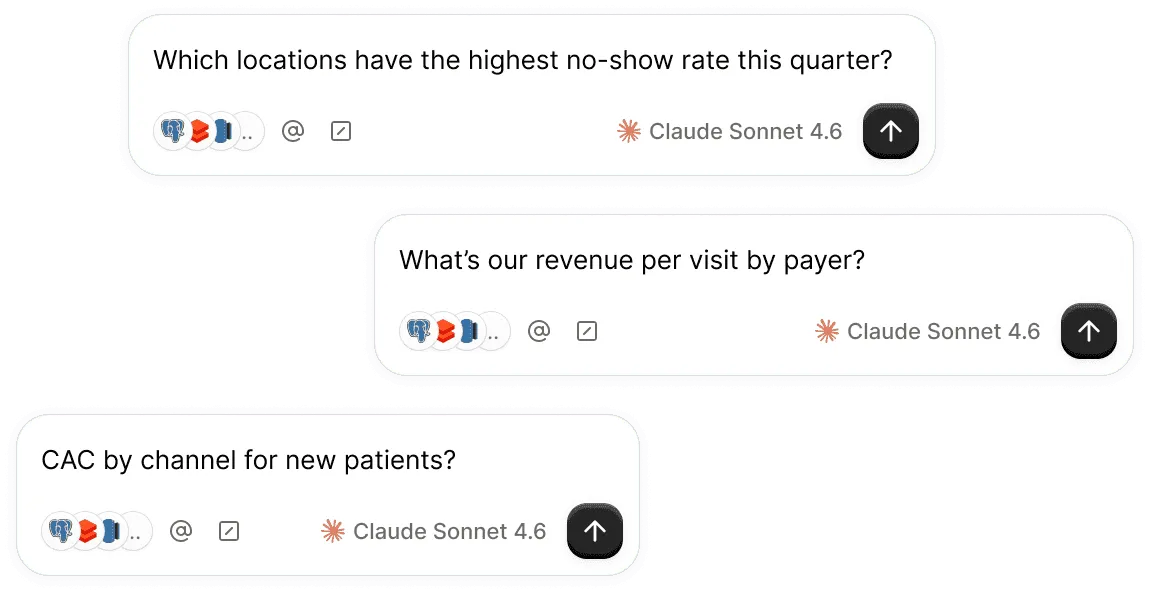
Ask the healthcare-business question in plain English
Ops leads, finance, and marketing ask Querio in plain English: “which locations have the highest no-show rate this quarter?”, “what’s our revenue per visit by payer?”, “CAC by channel for new patients?”. Querio runs against your warehouse using your existing credentials and access policies — patient data doesn’t move. The data team can audit the analysis whenever finance or compliance asks.
Built for healthcare companies
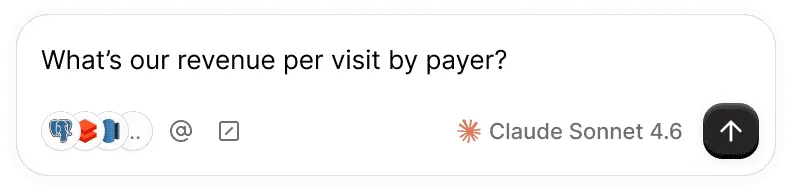
Plain-English Explore
Ops, finance, and marketing ask without SQL.
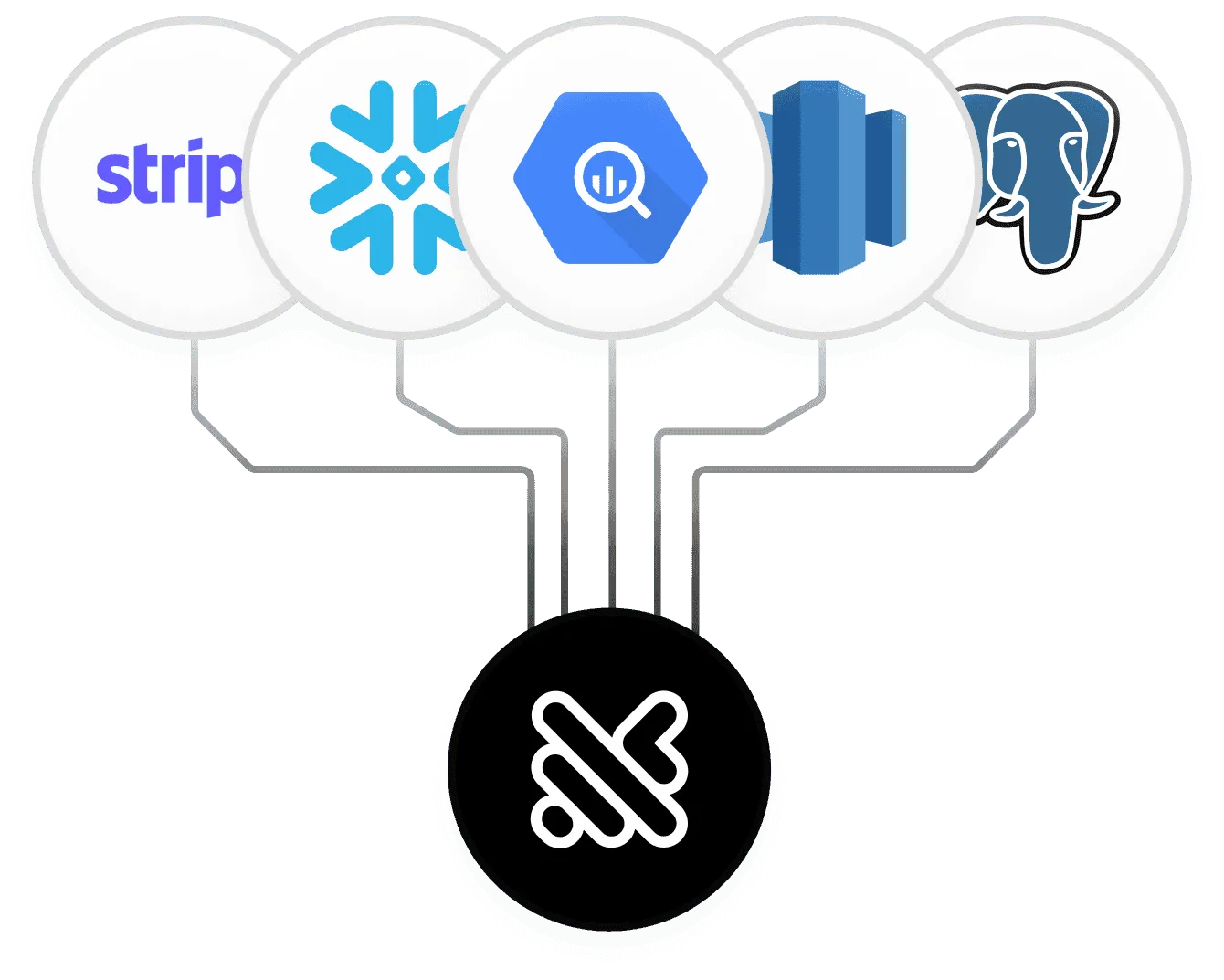
Connects where your data lives
Querio queries the warehouse where your EHR extracts, claims, scheduling, billing, and marketing data land. BigQuery, Snowflake, Postgres, Redshift, ClickHouse, and more.
Embed where you work
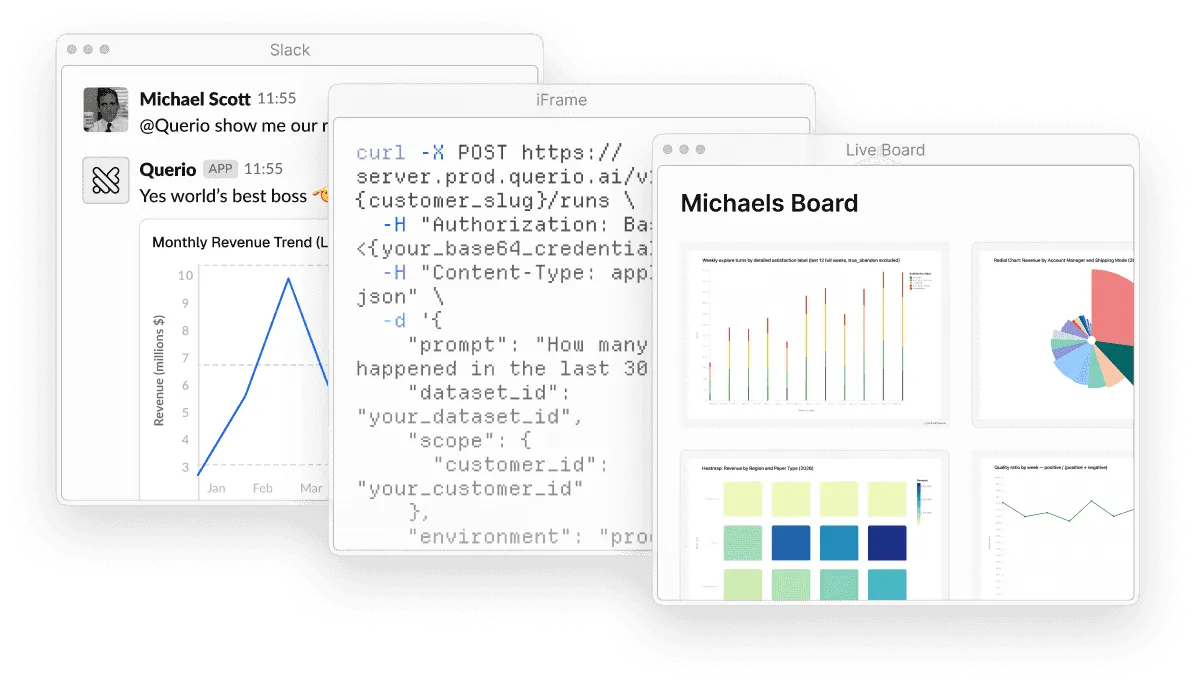
Boards live on a URL. Embed in your CS platform via iFrame, or drop in Slack.
“We stopped being the reporting team. We got to be a product team again — while the business got faster, not slower.”

Built for teams that can't compromise on security.
SOC 2 Type II. Customer data is never used to train models. RBAC and SSO. Querio runs against your warehouse using your existing credentials.
Read our security review ›Your data is never used for training
Querio has read-only access to your data. We cache conversation previews so your past chats load fast — nothing else is stored, and nothing is ever used for training, on our side or our model providers'.
Your queries run inside your infrastructure
Querio's code execution environment — where credentials live and queries hit your database — can run on your own infrastructure. Your data never leaves your perimeter to be queried.
SOC 2, GDPR, and HIPAA ready
Compliance documentation ready for procurement. BAAs available for healthcare, full GDPR alignment for EU data.
Built for security reviews
Documentation, architecture diagrams, and security questionnaires ready to go. We've been through the review process — we know what your team needs.
Frequently Asked Questions
Where does patient data live?
In your warehouse. Querio doesn’t move it. The agent runs SQL or Python against your warehouse using your existing access policies.
Does Querio work with our EHR?
Querio queries the warehouse where your EHR extracts and downstream data land. If you have an EHR sync into a warehouse, Querio reads from it like any other table.
What about HIPAA?
SOC 2 Type II is in place. For your specific HIPAA posture and any BAA requirements, speak to our team.
Can our marketing and ops team use it without seeing patient data?
Yes. Warehouse-side access policies are respected. RBAC stacks on top.
How fast to start?
A free trial sets you up in minutes. A guided pilot for a healthcare company typically takes longer when a security review is involved — usually four to eight weeks.