

Querio vs Looker
A side-by-side look at Querio and Looker. We keep our reviews honest and fair so you can make an informed decision.
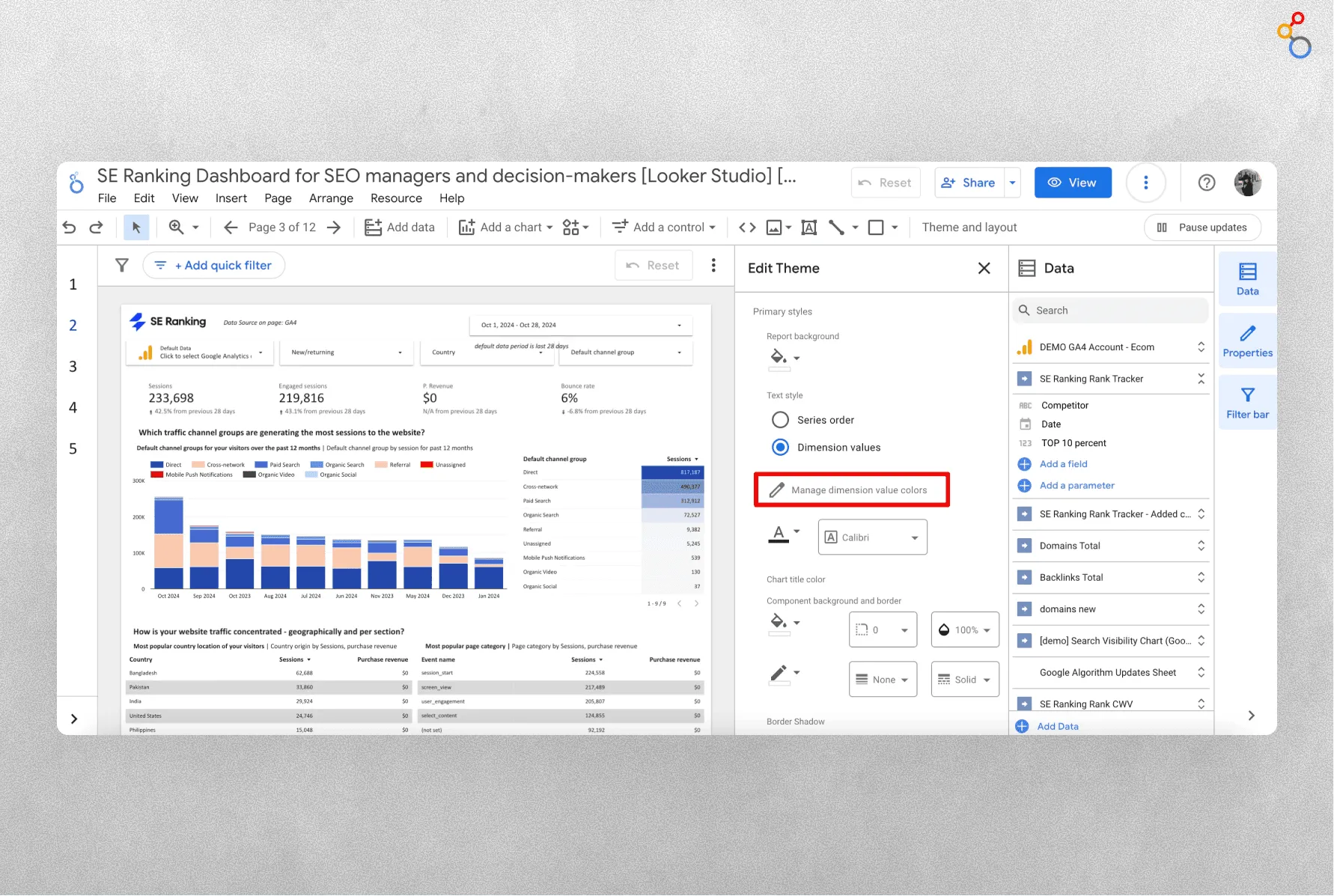
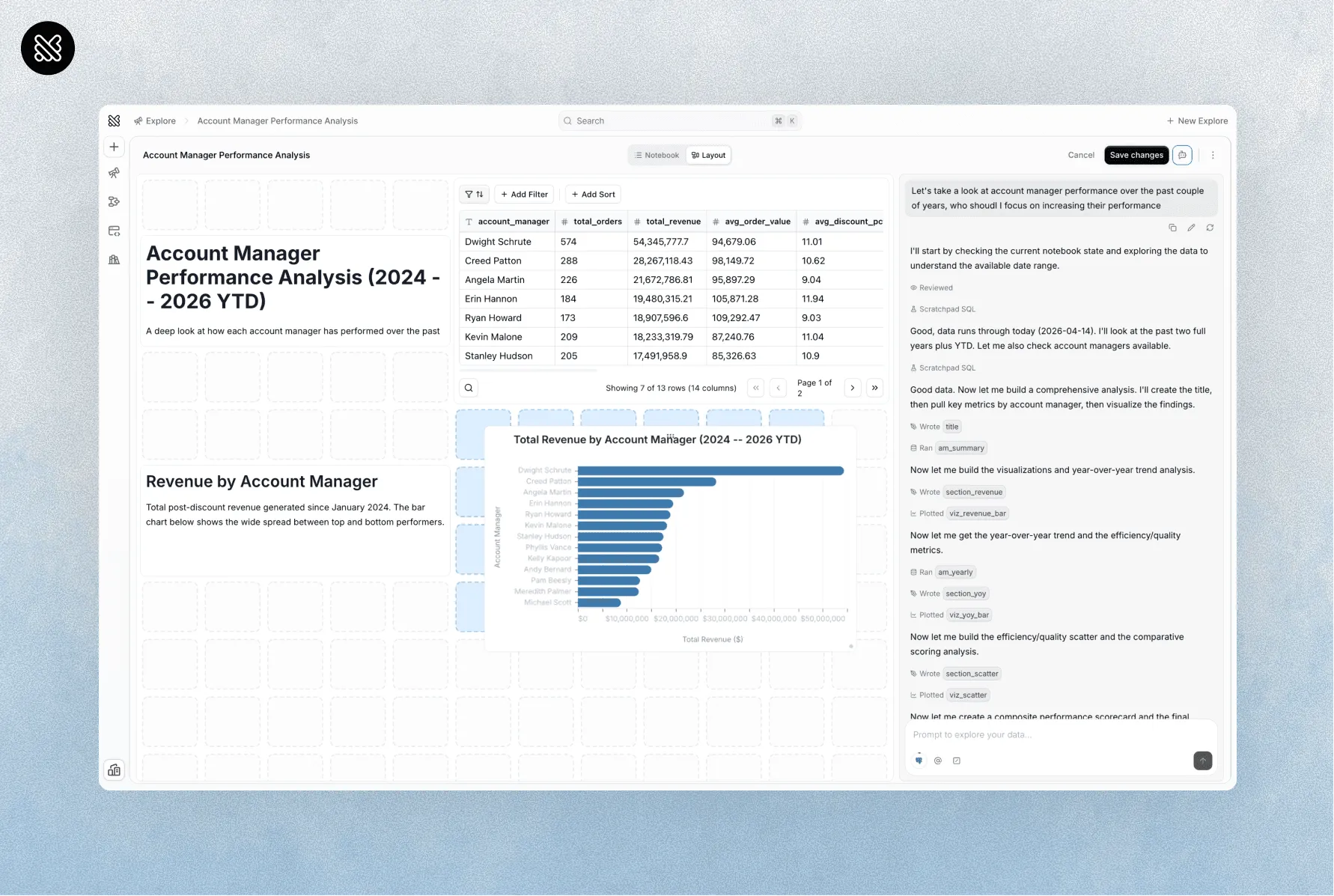
‹ QuerioDrag to compareLooker ›
The modern alternative to modeled BI
Looker is a modeling tool with dashboards on top. Querio is a workspace where anyone in your company can ask a question and get back a real answer, with the SQL and Python they can audit. Looker was the right product for the pre-AI decade. Querio is what teams adopt when they want the governance Looker gave them without the ticket queue it created.
The real decision
Most teams comparing these two aren’t asking “which has more features.” They’re asking one of three things:
1. Who actually gets to ask questions?
In Looker, the explore is powerful but requires training. In practice, analysts build dashboards and everyone else looks at them. Follow-up questions go back in the queue.
In Querio, anyone can type a question in plain English. The AI writes SQL against your semantic layer and shows its work. Analysts spend their time on hard problems instead of one-off tickets.
2. What does access cost?
Looker charges per user, split across a platform license and per-seat pricing that climbs fast. Most orgs end up rationing viewer seats.
Querio is a base plus AI usage. No per-seat pricing: unlimited users on every plan. The finance analyst who needs one chart a quarter costs almost nothing.
3. Do you have to rebuild your stack?
No. Querio can import from LookML if you have it. Your semantic layer is already halfway written; we read it instead of making you rewrite it.
Where they overlap, where they don’t
| Features | Querio | Looker |
|---|---|---|
| AI-native conversation | Yes | Partial (Gemini) |
| Notebook + BI in one tool | Yes | No |
| Python alongside SQL | Yes | No (native) |
| Semantic layer | Yes (imports LookML) | Yes (LookML) |
| Unlimited users | Every plan | No (seat-based) |
| Self-hosted deployment | Yes | No |
| Mature dashboard viewer ecosystem | Growing | Yes |
| Gemini / Google Cloud bundle | No | Yes |
Pick Looker if
-
You already have LookML expertise and a mature modeled data layer.
-
Your analytics workflow is centered on governed dashboards and explores.
-
You can support the ongoing engineering work that Looker requires.
Pick Querio if
-
You want to use your existing semantic layer without rebuilding it.
-
You want non-technical teams to investigate data in plain language.
-
You want an adaptable workspace for AI, SQL, Python, and BI.