

Querio vs Hex
A side-by-side look at Querio and Hex. We keep our reviews honest and fair so you can make an informed decision.
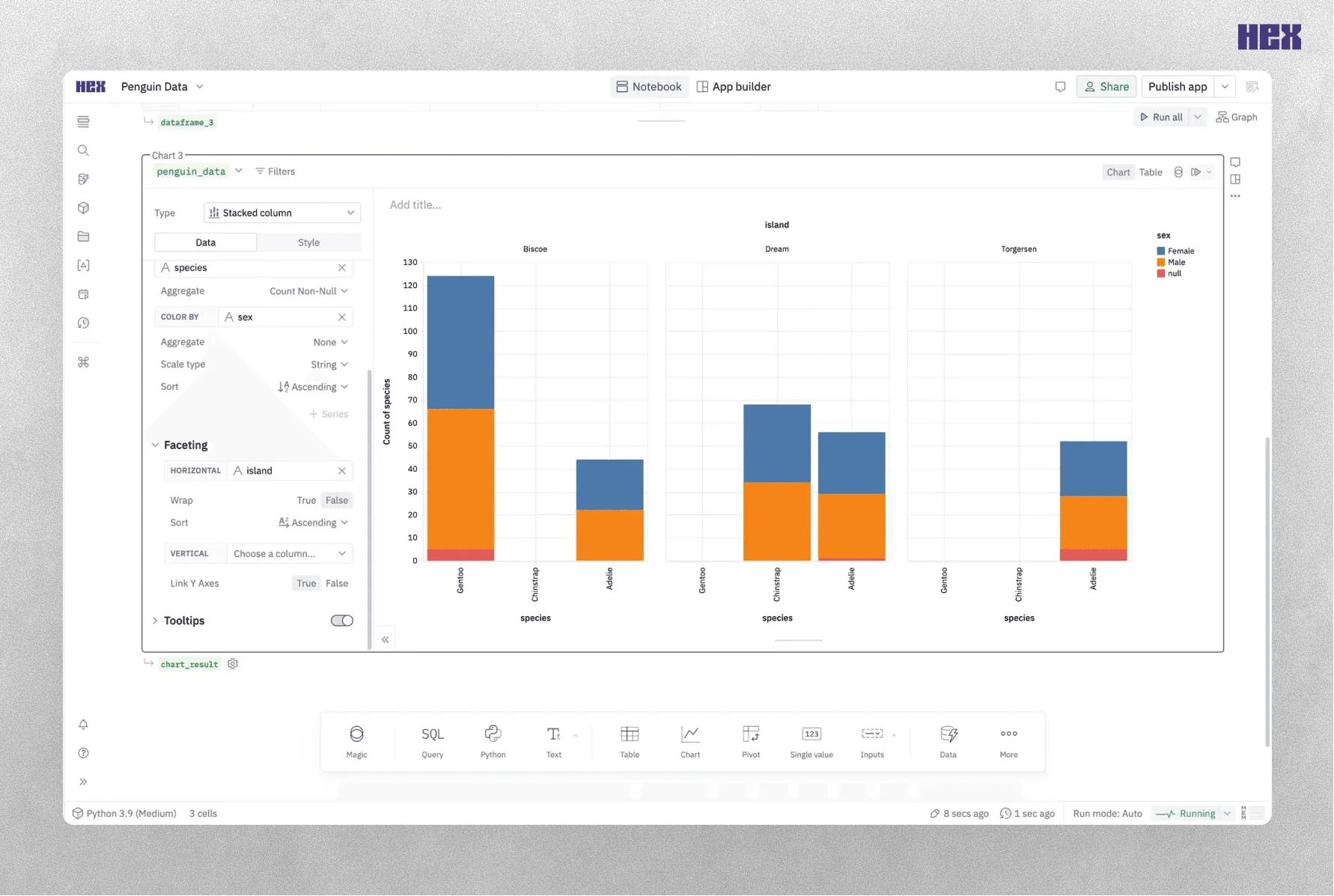
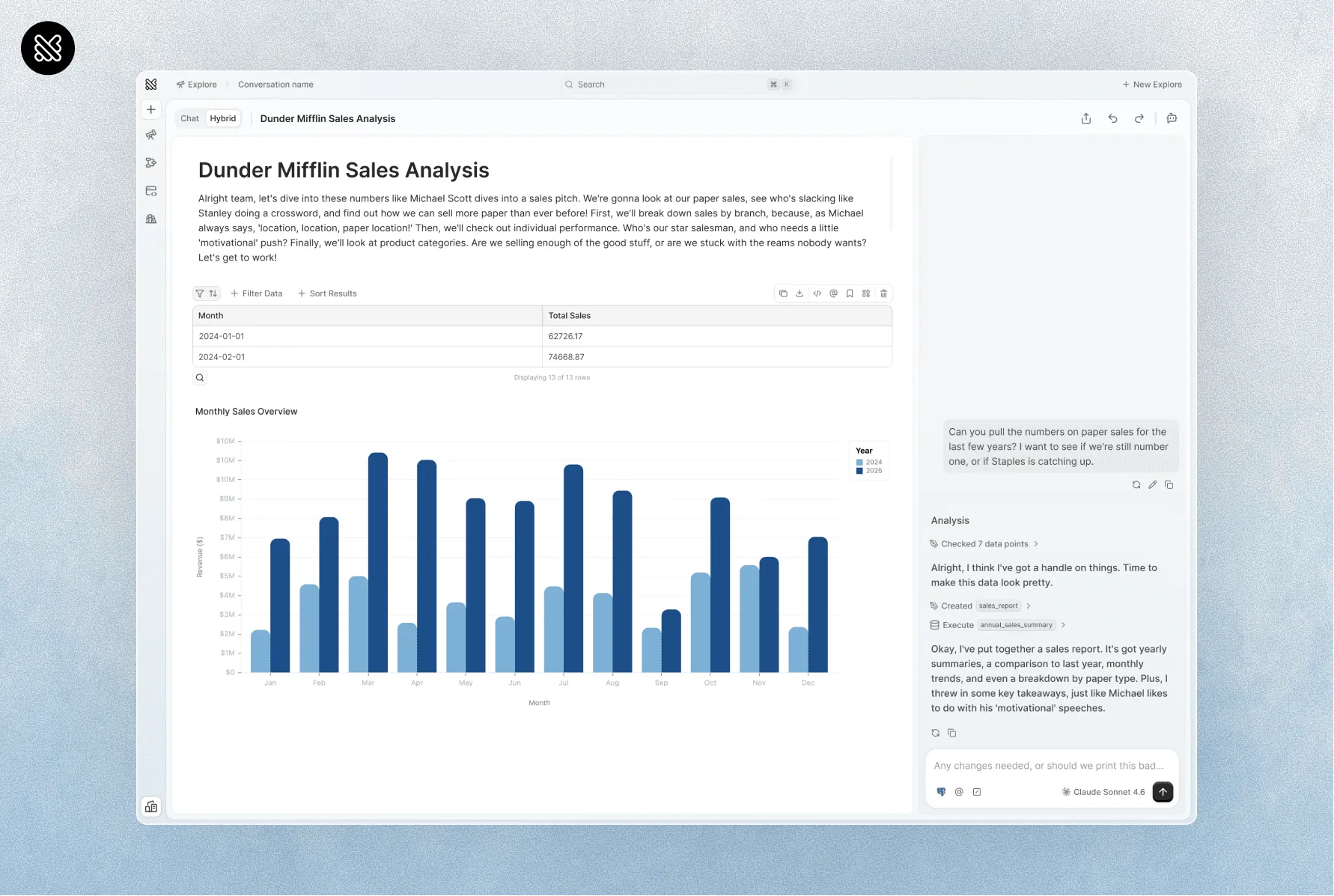
‹ QuerioDrag to compareHex ›
The notebook, but for everyone
Hex built the best notebook for analysts. Querio builds the best workspace for analysts and the people who ask them questions. If you’ve ever watched a business user squint at a Hex notebook and say “can you just send me the number,” you understand the difference.
How to decide
1. Who is the product for?
Hex assumes the reader can read code. That works for data teams. It doesn’t work for the finance lead who wants to drill into last quarter’s revenue without learning Python.
Querio gives analysts the notebook they need and gives everyone else a chat interface on the same substrate. Same semantic layer, same data, same governance. Different surfaces.
2. What does it cost for non-analysts?
Hex charges per editor seat. Viewers are free but can’t really do anything beyond looking at what someone built for them.
Querio is a base plus AI usage. No per-seat pricing: unlimited users on every plan. You’re not budgeting who gets access.
3. Are you building AI-native products?
Querio exposes an MCP endpoint so agents and LLMs can query your warehouse through a governed semantic layer. If “give our AI product access to our data” is on your roadmap, that’s a shape Hex doesn’t currently offer.
Where they overlap, where they don’t
| Features | Querio | Hex |
|---|---|---|
| Reactive notebook | Yes | Yes |
| SQL + Python | Yes | Yes |
| AI layer for non-coders | Primary surface | Assistant in the notebook |
| Semantic layer | Yes | Yes |
| MCP endpoint for agents | Yes | No |
| Unlimited users | Every plan | No (per editor) |
| Deep ML / custom-script depth | Medium | Higher |
| Alerts on thresholds | No | Yes |
Pick Hex if
-
Your core users are analysts who prefer notebooks and custom workflows.
-
You need a workspace optimized for technical exploration and collaboration.
-
Business-user self-service is not your primary analytics goal.
Pick Querio if
-
You want business users to get reliable answers in plain language.
-
You want analysts to inspect and edit the SQL and Python behind every result.
-
You want a unified workspace for conversational BI and deeper analysis.