Life
The To-Do System I've Used for a Decade
After a decade of iteration, I've landed on a dead-simple weekly planning system
 Javier BonillaCo-founder & CTO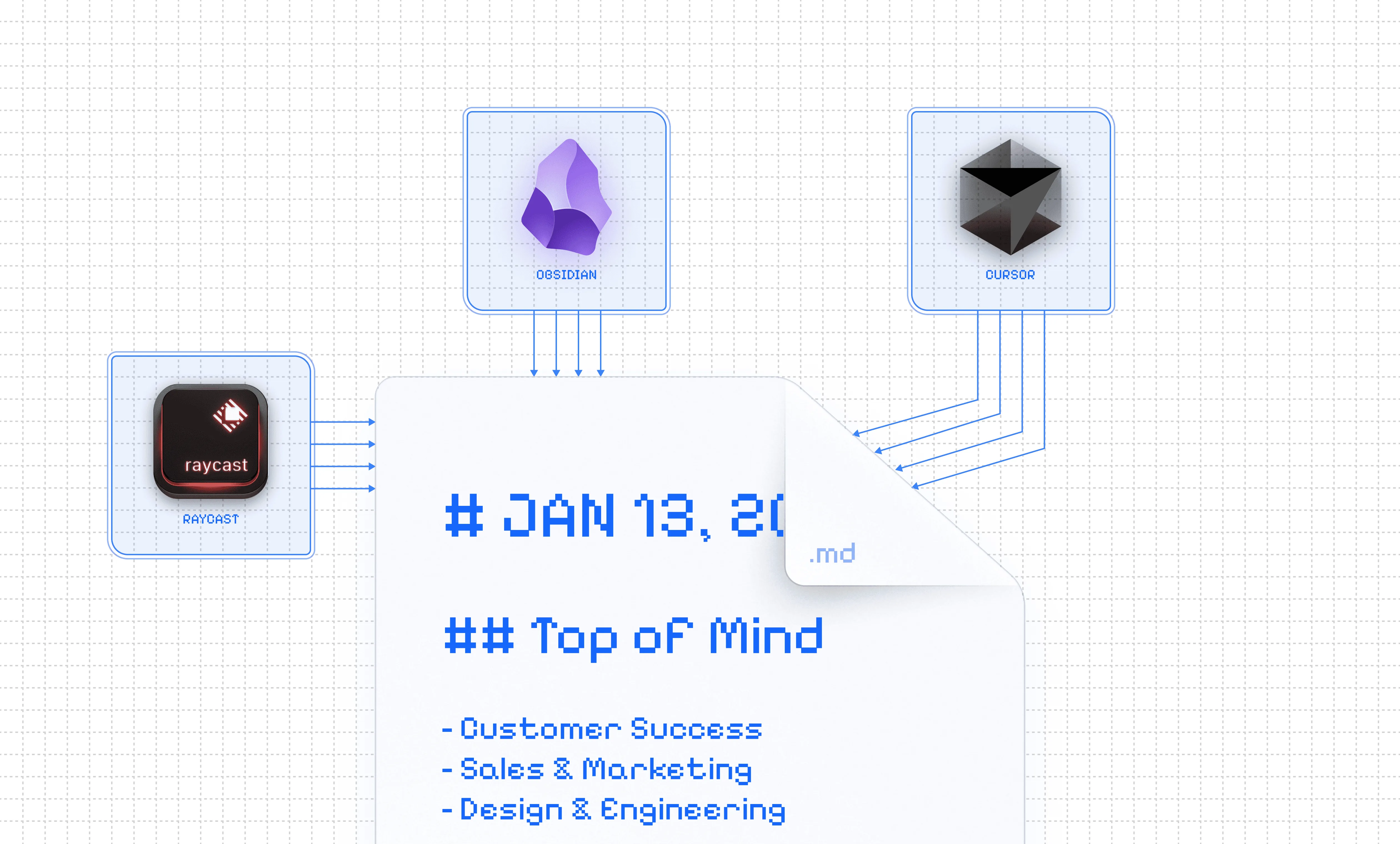
I've been using more or less the same system for managing my to-dos for a decade now. I'm going to walk you through its current state and why I like it.
I'll spare you most of the story and iteration states, but a bit of context never killed anybody. I started my planning system during university using a physical notebook—a red Moleskine that felt nice to write in and even nicer to scratch things off as I finished them.
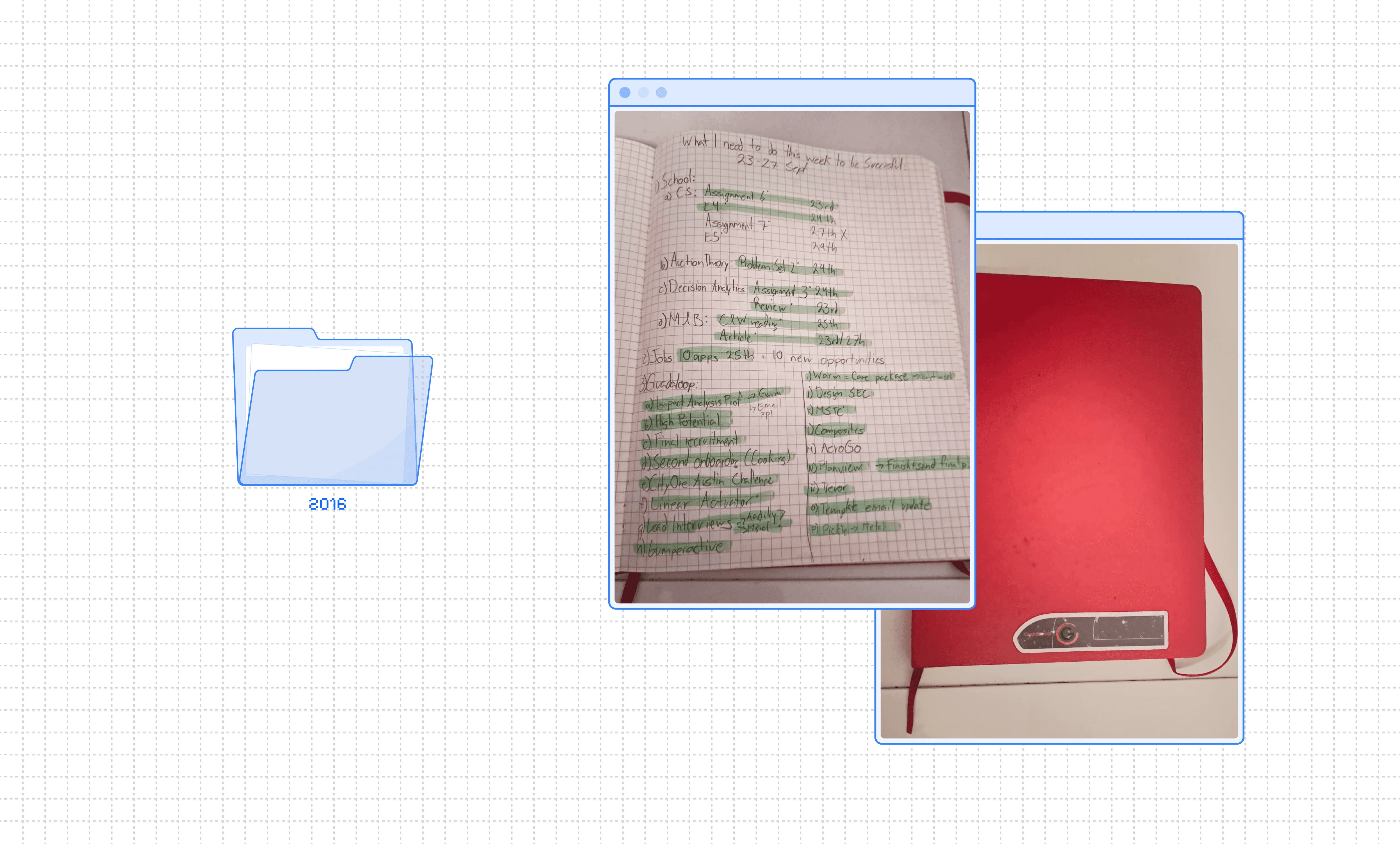
That was probably the system's most beautiful moment, back when life was simple enough to fit in something you could carry in your pocket.
I quickly outgrew it once I became a professional. There was just too much stuff going on, so I went digital. Started on Notion, recently switched to Obsidian. Long live [.md](<http://xn--fxg.md/>) files in the age of agents. Plus, I'm pretty tired of having all my shit stored away by some big-ass company.
When I first went digital, like any Notion fan would, I went a bit too crazy. Tried to track everything perfectly—databases, relations, properties, the whole nine yards. It worked for a bit. Then I was actually given some responsibility, and managing my Notion to-do's wasn't really helping me get things done. Since then, my responsibilities have slowly grown, peaked as a founder, and I've ended up with something surprisingly simple but efficient.
It's a combination of a notes structure and a daily process. Here's how it works.
Structure
The notes are structured very simply. I get one document per week, and in that document there are two main sections: Top of Mind and Daily Priorities.
Top of Mind is divided by topic and highlights all the things I consider important not to forget. The topics change as my roles change. Right now, as a founder, it's divided into Customer Success, Sales & Marketing, Design & Engineering, Product, Company, Personal, and Inbox.
After that comes Daily Priorities, which has an entry for each day of the week, Monday through Sunday.
So we end up with a structure that looks like this:
# Month Day, 2026

## Top of Mind

- Customer Success
- Sales & Marketing
- Design & Engineering
- Product
- Company
- Personal
- Inbox

---

- Monday
- Tuesday
- Wednesday
- Thursday
- Friday
- Saturday
- Sunday
Simple, right? That's the point.
Process
The process is the most important part, though. The system won't upkeep itself, but upkeeping the system also isn't my main job. I need to find the balance where the effort I put in provides outsized returns. Here's how I do that:
Monday is weekly planning day. I spend about an hour reviewing my document from last week, writing the Top of Mind for this week, and assigning tasks to specific days depending on what my calendar allows and how urgently something is needed.
As the week goes by, things pop up that I don't need to handle immediately. These get thrown into the Top of Mind Inbox to be assigned to a particular day the next morning.
First thing in the morning, Tuesday through Sunday, I spend 10-20 minutes giving my Top of Mind a quick read (making sure it stays top of mind 😅) and moving tasks around as needed between days and out of Inbox.
When possible, I time-box tasks and use Raycast Focus to hold myself accountable. I've made this easy with a Raycast snippet for common time boxes, which I add in front of the task like (0.5h), and then a quick @raycast-focus start session for: whatever I'm doing with my preferred focus settings already configured.
When I finish a task, I scratch it off. It's not as nice as the green highlighter I used to use with that red Moleskine, but it still feels good and keeps me going.
Finally, because I've moved everything to Obsidian locally on my machine and it's all .md files, I can easily open them in Cursor or Claude Code and have a quick chat to get a little help.
That's it. Simple enough not to require a ton of time. I've been doing it long enough that it feels totally natural. Flexible enough that I can adapt as my role changes—and trust me, as a founder, that role changes constantly.
The secret isn't some revolutionary productivity hack. It's finding a system lightweight enough that you'll actually use it, structured enough that it keeps you focused, and flexible enough that it grows with you. For me, that's a markdown file, two sections, and 20 minutes every morning.
If you're drowning in productivity tools or videos that promise to "revolutionize" your workflow, maybe try the opposite. Strip it down to one file, two sections and daily dose of effort. See what happens.