Design
Cool apps use emojis
Emojis, their use cases and how they affect the UX
 Mariia KrutskoFounding Designer
Hey there! 👋
I’m Mariia, Product Designer at Querio. I originally signed up as a UI/UX designer, but as it often happens in startups, I ended up wearing many hats. They even make me write blog articles now 🙂
I joined Querio right at the beginning, I was even the first one to join! Since the early days, our website and app design have changed sooo many times. From an outsider’s perspective, it might’ve looked like Querio’s designer was having an identity crisis. Well... that was true. We were all trying to figure out what Querio was. Actually, we still are and probably always will be.

Emojis, emojis, and more emojis
Let me take you back to the time when Querio was in its emoji era.
For context, I was a junior Gen Z designer, so naturally, using emojis felt like the obvious move. It was also a trend, many products were embracing those Apple smiley faces. Sometimes, though, it went too far. For example, in Ukraine (where I’m from), a serious government app called DIIA—which stores all your official documents would send notifications like: "You have to pay a fine☝️💸". Which to be honest doesn’t make it any less painful to do… though I do love the app.
With that in mind, I couldn’t resist in sprinkling emojis all over Querio whenever I had the chance. Javier (our co-founder), on the other hand, hated “those f***ing emojis.” We had constant debates over whether they had a place in our app at all.
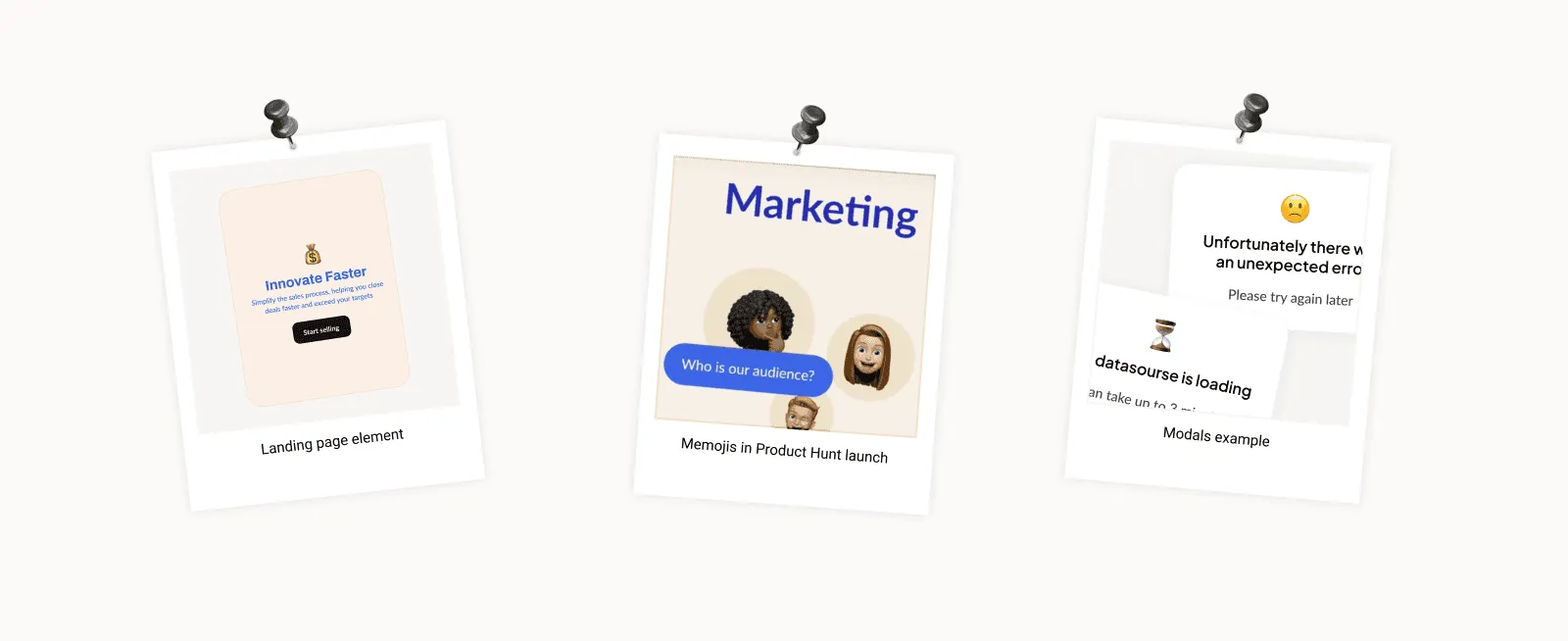
Overused emojis: guilty as charged 🧑⚖️
It took me a while to realize that the way we were using emojis made our designs look cheap rather than cool and friendly. The reason so many designers use emojis is simple: they’re easy and familiar. This made it so tempting to drop them into every modal and took minutes to put together an illustration.
But here’s the hard truth, unless you’re Apple, emojis don’t really add anything unique to your product.
What was the verdict?
As with most things, the truth was somewhere in the middle.
Once I started seeing emojis as a tool rather than a free 3D illustration pack, it all suddenly made sense.
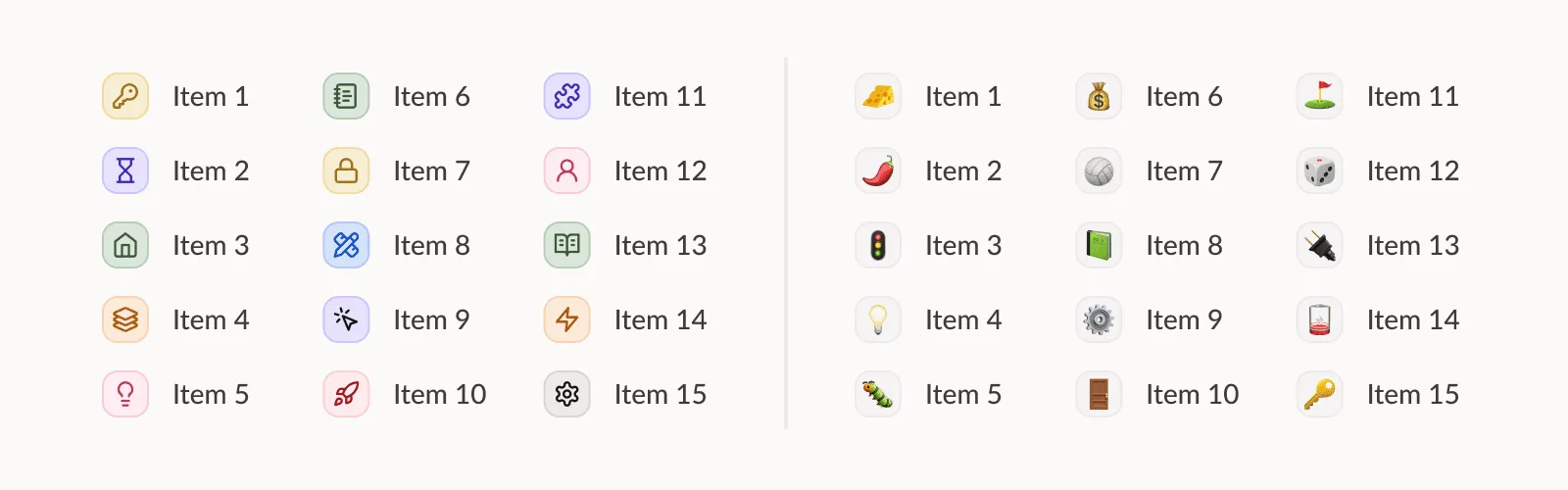
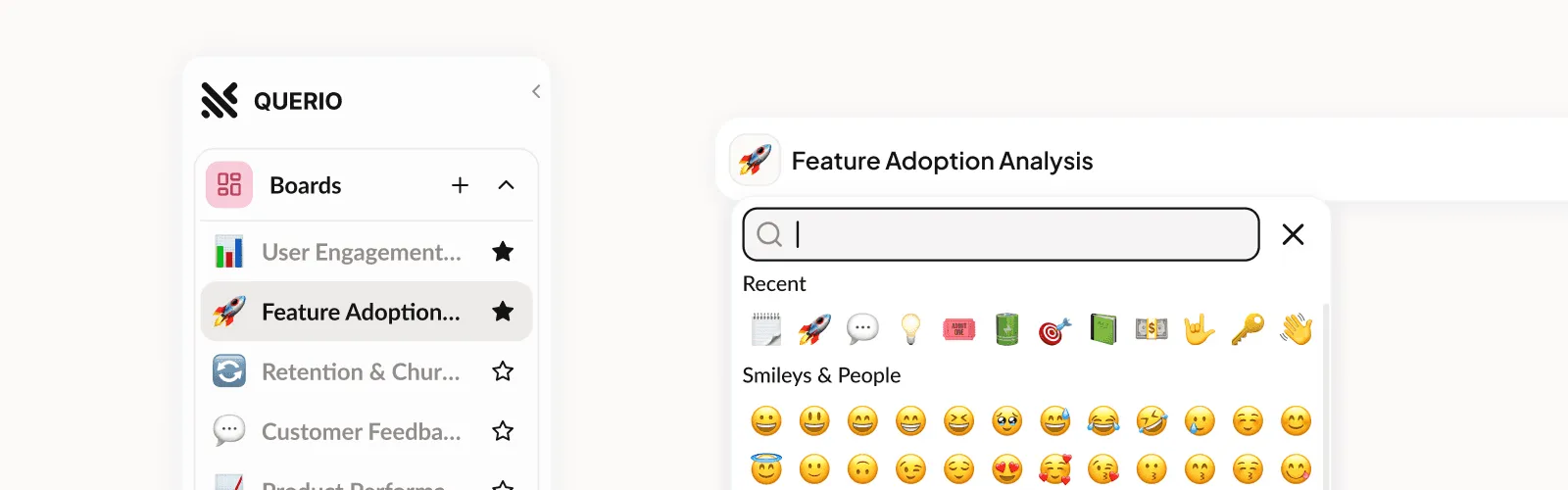
Do we still use emojis? Hell yeah. They’re fun, colorful, and most importantly, they work great for differentiating elements. Sometimes, icons just aren’t enough. If you have a long list of items, spotting a familiar emoji is much faster than scanning for a generic icon. Try it yourself below. What can you find first: green book emoji or green book icon?
Where do we use them?
We’re currently working on a new version of our app (spoiler alert! 🤫). In the new design, for example, users can select an emoji for their boards. This makes it much easier to find the right report, especially in the sidebar, where seeing full titles is a privilege.
You don’t need emoji to sound friendly
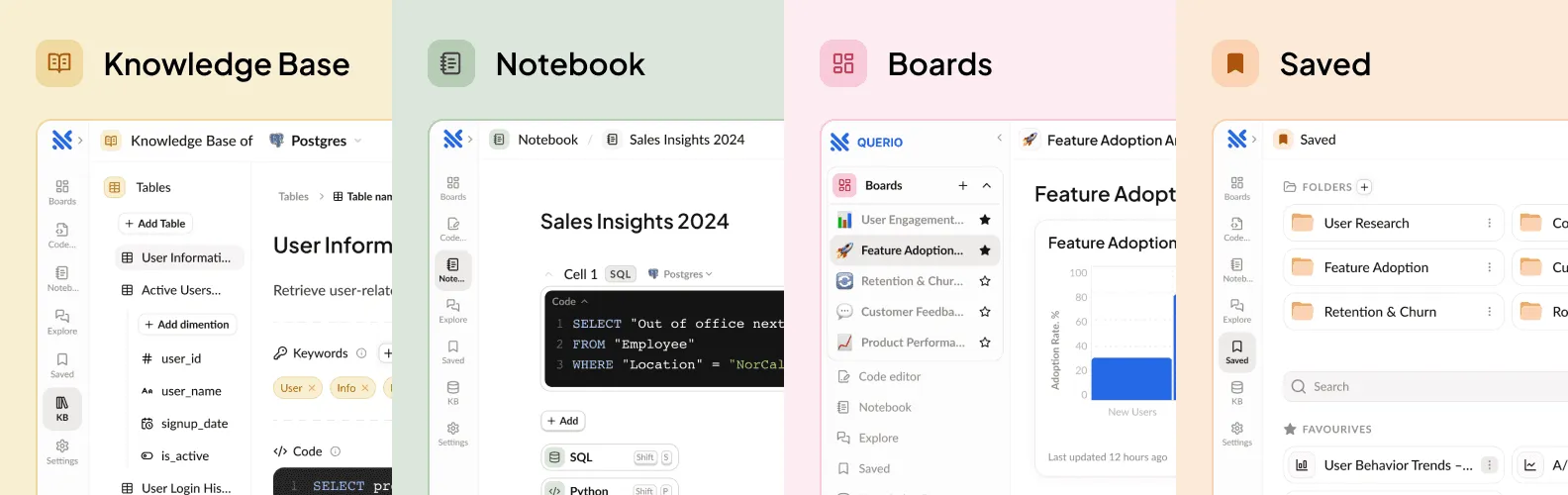
You might think removing emojis would make your app look boring and lifeless, but that's not the case. Instead of emojis, we added colors. This wasn't just for the sake of aesthetic appeal, it actually improved the user experience. By giving each tab its own distinct color, we created a pattern that works great for these reasons:
-
Colors act as visual hints and makes navigating between different sections more intuitive
-
It perfectly follows one of the main UX principles: "recall over recognition." Users quickly find the Knowledge Base section by spotting the yellow icons, without having to read the label.
-
Makes the interface feel more structured and organized.
-
Helps guide user behavior, reducing errors.
Thanks to some sweet color combos and friendly writing, Querio keeps its fun vibe going while making it super easy for everyone to get around!
To sum up
Yes, cool apps use emojis—but they don't make it their whole personality. Emojis are a tool, not an accessory. And as for visual elements, there are many better options that can make the UI unique and the UX awesome.